


A dialog between two characters to present a scenario for learners – Does this sound familiar? All of us who have been associated with eLearning development, mostly have developed such samples showcasing conversations and scenarios.
There was a time when such conversations were considered an engaging way to learn. To make it more effective, voice-overs were added. But, let us step-back for a moment and think if it is an engaging and active mode of learning? Isn’t it a pretty passive way where the learner is simply watching the screen and is only following what is being displayed? The question that arises then is, if such conversations or scenarios are not very effective, then how do we solve this problem? One possible solution that I can think of is to have the learner interact with the system as part of the scenario. And based on how the learner interacts, the system can respond to the learner and take the conversation ahead. With advancement in technology, chatbots could be used as an important element of this.
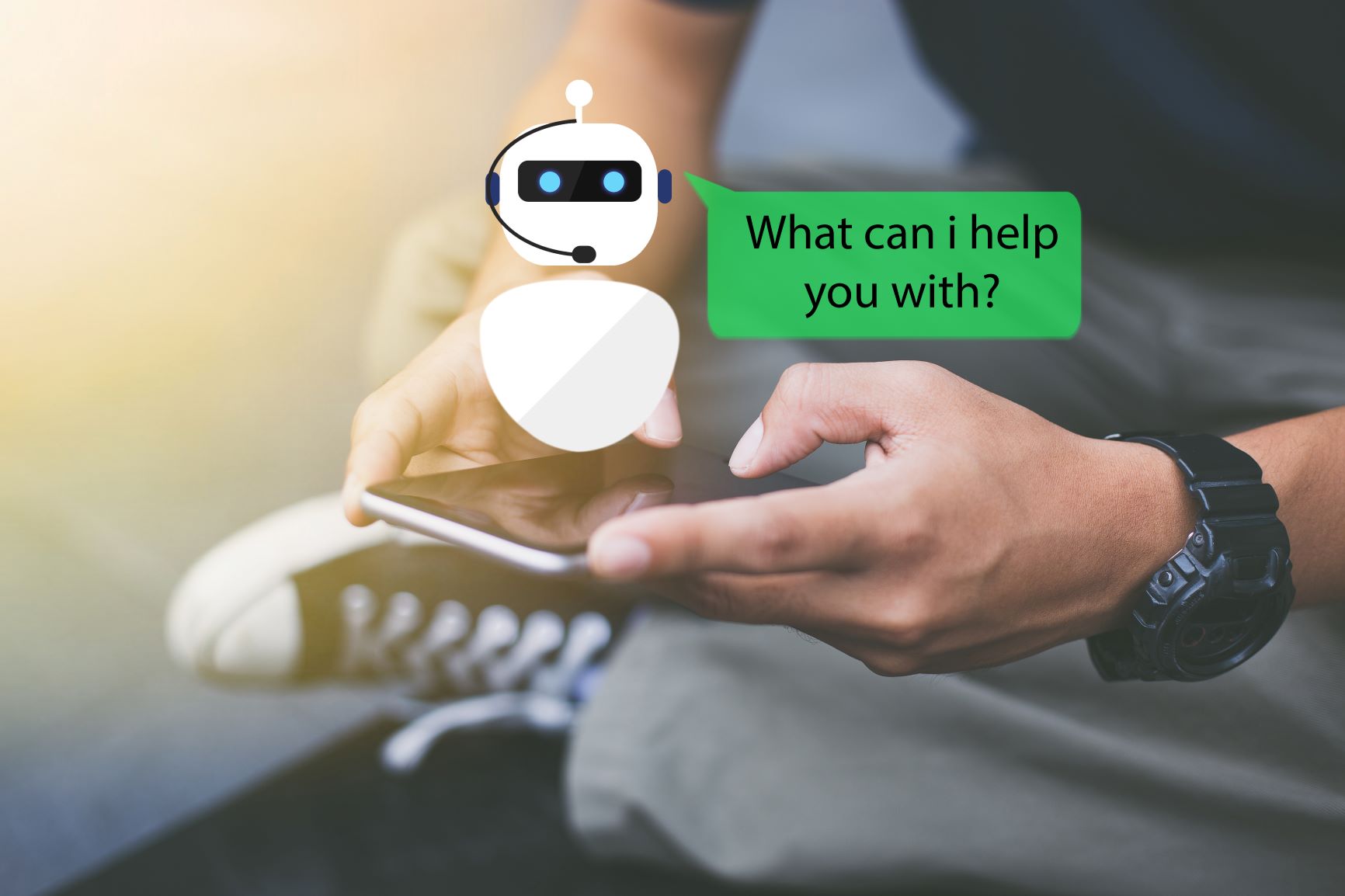
Chatbots are a great way to engage learners in a conversation and experience the scenario unfold. To explain it better, imagine a conversation between a doctor and a patient on the symptoms to observe for a disease. The doctor needs to recommend the right medication. To train a doctor well on this scenario, we could have the doctor (learner) converse with a bot which acts as a patient. The bot would respond to the doctor’s examination questions. This would help the doctor to know the right set of questions and gather as much information as possible before getting into the actual scenario. This bot could even be voice-enabled which will allow the learner to talk to the bot.
And how do we take this to an eLearning course? Well, in an eLearning course, a bot can be embedded instead of the conversation slides. And when it comes to questions or assessments based on the scenario, the course can continue like usual. Such chatbots can be created using variety of technologies such as Google DialogFlow, Microsoft Q&A Maker, and Amazon Lex.
Interested in seeing a demo? Feel free to reach out to us at contact@harbingergroup.com.

Additional Perspectives on the FDE Model
Forward-deployed engineering is gaining attention as a way to bring engineers closer to customer problems and real-world implementation. Several organizations describe this model as a way to align engineering work with customer needs, systems, and workflows. Here are a few resources that offer additional perspectives on the FDE model:https://www.griddynamics.com/glossary/forward-deployed-engineering
https://miragemetrics.com/guides/forward-deployed-engineering
https://www.cognizant.com/us/en/glossary/forward-deployed-engineer